Welcome to Medica.

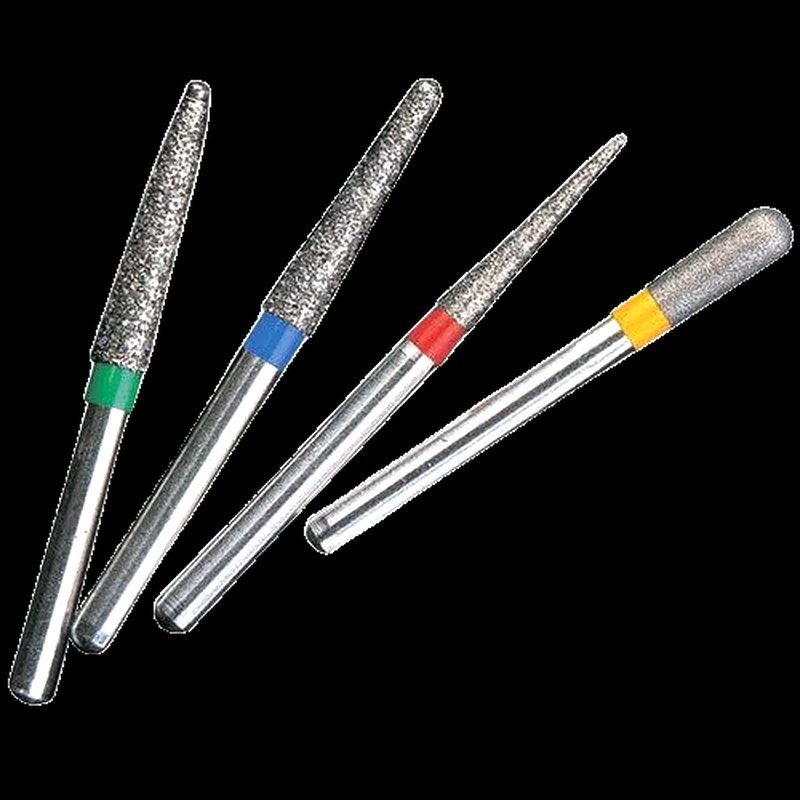
Diamond burs are commonly used to reduce tooth structure for placing crowns or porcelain veneers. They can also be used to smooth, refine, and polish composite or porcelain materials. Diamond is the hardest known material, and when bonded to stainless steel through a special process, it creates a cutting edge with exceptional durability and performance. However, compared to carbide burs, diamond burs tend to lose cutting efficiency more quickly, resulting in a shorter lifespan.
The Mani Straight Fissure (SF) Series, Mani Taper Fissure (TF) Series, and Mani Ball Round (BR) Series regular shank diamond burs offer precise cutting and shaping for various dental procedures. Brands like Mani and Denext provide reliable options for professional use, ensuring both high-quality performance and long-lasting results.
Diamond burs come in various shapes, each designed for specific dental procedures. Round burs are commonly used for cavity preparation and decay removal, while flame-shaped burs are ideal for refining contours and smoothing materials like crowns or veneers. The inverted cone bur is perfect for creating undercuts during cavity preparation, and crosscut burs are designed for fast cutting and reducing tooth structure, especially in crown procedures. Fissure burs are used for cutting or shaping grooves in teeth, while pear-shaped burs are often employed for initial cavity preparation and removing larger areas of decay, particularly in posterior teeth.
As for shank types, straight shanks are compatible with both high-speed and low-speed handpieces, offering versatility for different tasks. Contra-angle shanks are angled to provide better access to posterior teeth and are typically used with contra-angle handpieces, which improve maneuverability in tight spaces. Latch-type burs are designed for use with low-speed handpieces and provide secure attachment during dental procedures. Each of these burs and shank types plays a crucial role in ensuring precision, efficiency, and comfort in various dental treatments.
Diamond burs are versatile tools used in various dental procedures. For cavity preparation, they help remove decayed tooth material and shape the cavity. In crown and bridge preparation, diamond burs are used to reduce tooth structure and create an ideal surface for fitting restorations. During implant placement, they assist in shaping the bone and preparing the site for implants. Additionally, diamond burs are used for refining contours, polishing materials, and smoothing surfaces in restorative and cosmetic procedures.
To maintain bur integrity and prevent cross-contamination, it’s essential to follow proper cleaning, sterilization, and storage procedures. After use, clean burs immediately to remove debris using a soft brush and ultrasonic cleaner with an appropriate disinfectant solution. Rinse thoroughly with clean water to remove any remaining solution. Sterilize burs using an autoclave at the recommended temperature and pressure for dental instruments.
For storage, keep burs in a clean, dry container to avoid damage and contamination. Use a sterilization pouch or a dedicated bur holder to protect their sharpness and ensure they remain free from moisture and dirt. Never store burs in damp or contaminated environments to maintain their performance and longevity.
When using diamond burs, it’s important to follow safety precautions to ensure both patient and operator protection. Always set the handpiece to the appropriate speed and torque, as excessive speed or force can damage the tooth or bur and increase the risk of injury. Use the handpiece at a controlled, steady speed for precision. Additionally, wear appropriate safety eyewear to protect both yourself and the patient from flying debris and particles during procedures. Always follow manufacturer guidelines for bur and handpiece compatibility to avoid accidents and ensure optimal performance.
When selecting diamond burs for high-speed handpieces, consider the diamond grit first. Fine grit is best for smoothing and polishing, while coarse grit is ideal for material removal. Diamond burs come in two types: single-patient-use, which eliminate cross-contamination risks, and multi-patient-use, which are more cost-effective and can be sterilized and reused.
The shank size must be compatible with the handpiece for optimal performance. Most high-speed handpieces use standard sizes, but always double-check before purchasing. The shape of the bur also matters: round-end tapered burs are great for hard-to-reach areas and creating chamfer lines, while flat-end burs are used for removing excess material and preparing shoulder lines for crowns.
Staying informed on the latest advancements in diamond bur technology ensures the best results for your patients.
Shopping for dental supplies on Medikabazaar is convenient and efficient, offering a wide range of dental diamond burs for all your dental procedures. From fine to coarse grits and various shapes, you’ll find top-quality options to suit every need. Medikabazaar ensures affordable prices on all products, making it easier to stock up on high-performance tools without breaking the budget. For even more convenience, download the Medikabazaar Medical App to shop on the go and access a wide variety of medical supplies, or use dental medical app for easy order tracking and management.
At Medikabazaar, we guarantee authentic, high-quality products from trusted brands. Our dedicated customer service team is always ready to assist you, ensuring a smooth shopping experience and ongoing support for all your dental and medical needs.
Ans. A diamond bur is used in dentistry to cut, shape, and polish tooth structures, crowns, and veneers. It is ideal for precise material removal, cavity preparation, and refining surfaces during restorative procedures.
Ans. Diamond burs are made with a diamond coating that provides superior cutting ability and precision, ideal for shaping and polishing. Carbide burs, on the other hand, are made of carbide metal and are better for bulk material removal and cutting through hard tissues.
Ans. There are generally three main types of burs: diamond burs, carbide burs, and stainless steel burs. Each type is designed for different dental procedures, such as cutting, shaping, and polishing.
Ans. The most frequently used dental diamond burs are round-end burs for cavity preparation, flame-shaped burs for refining contours, and inverted cone burs for undercuts in restorative procedures. These burs are essential for precise cutting, shaping, and polishing.
Ans. Dental diamond burs can be either single-use or multi-use. Single-use burs are disposed of after one patient, while multi-use burs can be sterilized and reused multiple times.

Typically replies within an hour
I will be back soon

Reviews
There are no reviews yet.