Welcome to Medica.

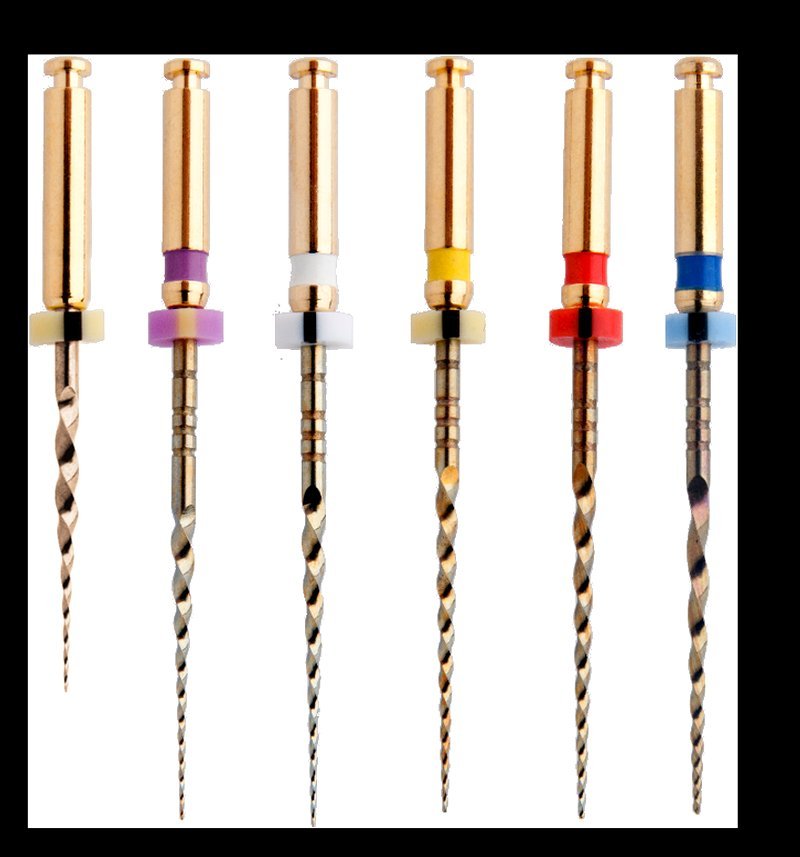
Rotary files are motor-driven tools made from nickel-titanium (NiTi) that dentists use during root canal treatments. Their flexibility allows them to clean and shape canals more smoothly and efficiently than traditional hand files, helping shorten treatment time and reducing the risk of errors.
Nickel-Titanium (NiTi) rotary files have transformed the way root canal treatments are performed. Unlike rigid hand files, these motor-driven tools are highly flexible, which means they can easily follow the natural curves of a tooth’s root canal without causing unnecessary stress or breakage. This flexibility not only preserves more of the tooth structure but also helps prevent errors during treatment.
Because they work faster and more smoothly than manual files, NiTi rotary files significantly cut down the time a patient spends in the chair. They also improve precision, making it easier for dentists to thoroughly clean and shape the canals before filling. For patients, this translates into a safer, more comfortable, and more reliable root canal experience.
In recent years, endodontic instruments have seen major improvements in design, surface coatings, and heat treatments to overcome one of the biggest challenges of NiTi files fractures inside the root canal during treatment. Heat treatment, in particular, has proven to be a key step in enhancing the flexibility and fatigue resistance of NiTi instruments, making them safer and more reliable for clinical use.
Alongside this, new motion techniques, such as reciprocating rotary systems, have been introduced to improve both safety and efficiency. These innovations take full advantage of the NiTi alloy’s unique properties, allowing dentists to shape root canals with greater precision and less risk.
Today, there are over 200 brands of instrument systems available, each offering variations in taper, rake angle, cross-sectional design, and alloy type. Researchers have even categorized these advancements into seven generations of instruments, each reflecting progress in design and material science. Thanks to NiTi alloys, dentists can now achieve the desired canal shape with fewer instruments and less effort compared to older stainless-steel files, which required multiple steps and were far less adaptable.
Medikabazaar makes large-scale purchasing simple and cost-effective for hospitals and dental clinics. From competitive dental product pricing and flexible payment options to timely delivery, brands to compare like dentsply rotary files, neoendo rotary files, healix rotary files, woodpecker rotary files many more and after-sales support, bulk procurement ensures uninterrupted supply of essential dental products, consumables, and equipment. Dedicated account managers and compliance-focused sourcing further add to a seamless buying experience.
NiTi rotary files usually last for 3–10 uses in clinical practice, depending on the brand, design, and complexity of the canal. Their lifespan can be extended with proper handling, cleaning, and sterilization protocols.
Heat-treated NiTi rotary files endo offer greater flexibility and fatigue resistance, reducing the risk of breakage. Conventional NiTi files are stiffer and more prone to fracture, especially in curved canals.
Yes, Medikabazaar offers single-file NiTi rotary systems that simplify root canal procedures. These systems help save time, reduce instrument fatigue, and improve treatment efficiency for clinics.
NiTi rotary files should typically be replaced after 3–5 uses, depending on canal complexity. Regular replacement helps prevent file separation and ensures safe, efficient performance.
Yes, bulk orders at Medikabazaar often include technical support and guidance. Clinics and hospitals can also access training for proper use of NiTi rotary files to ensure safe practice.

Typically replies within an hour
I will be back soon


Reviews
There are no reviews yet.