
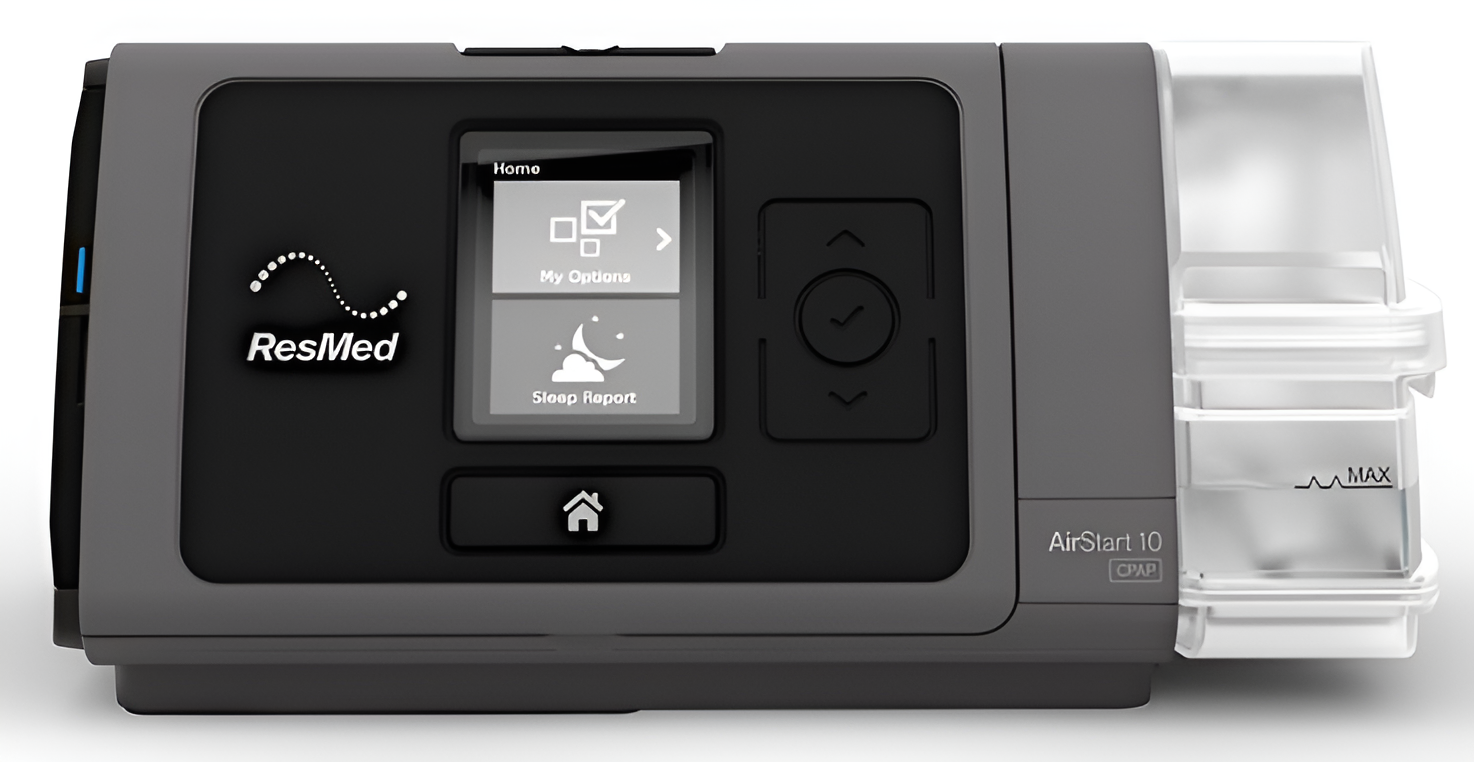
A CPAP (continuous positive airway pressure machine) machine is a device used to treat sleep apnea. It works by delivering a steady stream of air through a mask to keep the airway open during sleep, preventing interruptions in breathing and helping individuals get a restful night’s sleep.
A CPAP (continuous positive airway pressure machine) machine is used to treat sleep apnea by delivering a constant flow of air to keep the airways open during sleep. It consists of:
Some CPAP machines come with additional features like heated humidifiers and adjustable pressure settings.
There are several types of PAP (Positive Airway Pressure) devices, with CPAP being the most common. Other variations include:
Adaptive Servo-Ventilation (ASV): Adjusts pressure based on breathing patterns, especially for central sleep apnea.
Auto-titrating CPAP (APAP) or Automatic CPAP machine: Adjusts pressure automatically based on your breathing patterns. Ideal for people with varying airway pressure needs throughout the night.
Fixed Pressure CPAP: Delivers a constant, preset air pressure throughout the night. Commonly used for patients with consistent sleep apnea severity.
Bilevel Positive Airway Pressure (BiPAP): Provides two levels of pressure—higher for inhalation and lower for exhalation. Often used for patients with more complex sleep apnea or respiratory conditions.
Using a CPAP unit machine regularly to treat sleep apnea offers both immediate and long-term advantages.
In the short term, it helps by reducing breathing disruptions during sleep, leading to:
Over time, consistent CPAP unit use can offer additional long-term benefits, such as:
CPAP machines are primarily used to treat obstructive sleep apnea (OSA), a condition where the airways collapse or narrow during sleep, causing brief breathing pauses. These interruptions can occur many times throughout the night, leading to low oxygen levels. If left untreated, OSA can increase the risk of:
OSA can also raise the risk of accidents due to daytime drowsiness.
CPAP machines help keep the airways open during sleep, preventing breathing pauses. They are also used in other medical conditions, such as assisting preterm infants in the neonatal ICU whose lungs are underdeveloped.
A CPAP machine uses a motor to generate a continuous flow of pressurized air, which passes through a filter and into a flexible tube. This tube then delivers purified air to a mask that covers your nose or mouth.
While you sleep, the steady airflow helps clear any obstructions in your airways, ensuring that your lungs receive adequate oxygen. This prevents your breathing from stopping, allowing for uninterrupted sleep.
A CPAP machine is commonly used to treat sleep apnea, a condition where breathing stops temporarily during sleep due to airway blockages. It can also be used for other breathing-related sleep disorders.
It’s crucial to consult a healthcare professional for proper diagnosis and treatment. A doctor can determine if CPAP therapy is suitable and recommend the appropriate pressure settings based on individual needs.
CPAP machines come with several accessories that enhance comfort and hygiene. These include:
Masks: Available in various styles (full-face, nasal, or nasal pillows), masks ensure a secure fit for effective therapy.
Humidifiers: Help moisten the air to prevent dryness and irritation in the nose and throat.
Cleaning Supplies: CPAP cleaning wipes, brushes, and sanitizers help maintain hygiene and prevent bacterial buildup.
To clean and maintain a CPAP machine:
Buying CPAP equipment has never been easier with storemedica, offering a seamless online shopping experience. The platform provides a wide variety of CPAP machines, including the Resmed AIRSTART 10 CPAP Machine, BAMC CPAP Machine, and the Deck Mount Respirare CPAP Machine, catering to different patient needs and preferences. With top brands like Resmed and BAMC, customers can trust the quality and reliability of these devices. storemedica ensures affordable cpap machine prices for all products, making it a convenient and cost-effective choice for healthcare equipment. Plus, with the storemedica medical app, you can access a range of medical supplies and equipment on the go, ensuring a hassle-free shopping experience. Understand the difference between CPAP and BiPAP and choose the best device for your needs today!
At storemedica, we are committed to providing only authentic and high-quality products to our customers. We ensure that all CPAP machines and other medical supplies meet strict quality standards, so you can trust that you’re getting reliable, effective equipment for your health needs. Our excellent customer service team is always ready to assist with any inquiries, ensuring a smooth and satisfying shopping experience. Additionally, with the storemedica medical app, you can easily browse our wide selection of products, track your orders, and access support whenever needed. Your health and comfort are our top priorities!
Ans. A CPAP machine is used to treat obstructive sleep apnea by delivering continuous airflow to keep the airways open during sleep. It helps prevent breathing interruptions, improving sleep quality and oxygen levels.
Ans. A CPAP machine does not provide pure oxygen; it delivers continuous air pressure to keep the airways open. This helps prevent breathing interruptions, improving oxygen flow naturally while you sleep.
Ans. CPAP (Continuous Positive Airway Pressure) provides a constant airflow to keep airways open, primarily for sleep apnea. BiPAP (Bilevel Positive Airway Pressure) offers two pressure levels: higher during inhalation and lower during exhalation, used for more complex breathing issues.
Ans. Yes, CPAP helps improve lung function by ensuring continuous airflow, preventing airway collapse during sleep. This reduces strain on the lungs, promotes better oxygen intake, and improves overall respiratory health in people with sleep apnea.
Ans. CPAP is used at night to keep the airways open during sleep, preventing breathing interruptions caused by sleep apnea. This ensures continuous oxygen flow, improving sleep quality and reducing health risks like heart disease and stroke.

Typically replies within an hour
I will be back soon


Reviews
There are no reviews yet.