Welcome to Medica.
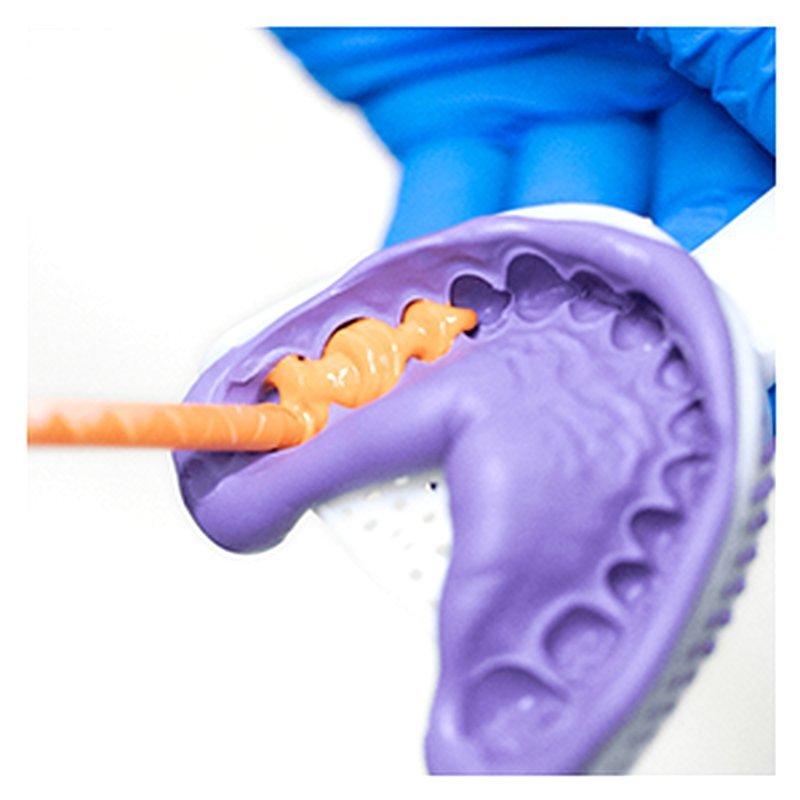
Elastomeric impression materials are a type of dental material used to create precise and flexible molds of teeth and oral tissues. These materials are known for their ability to accurately capture fine details and provide a flexible, yet stable, impression.
Polyvinyl Siloxane/ Addition Silicone Impression Materials: Vinyl polysiloxane (PVS) or addition silicone impression material impresses in detail reproduction, making it ideal for precise crown, bridge, and implant models. Its various viscosities bond well, allowing for accurate impressions with less viscous materials supported by thicker ones. PVS maintains dimensional stability once set, ensuring accuracy during packaging and transport.
However, PVS is sensitive to chemical contamination from latex and retraction cords, which can lead to inaccuracies. It can also tear easily due to its tendency to lock into interproximal spaces and its short working time, making it less suitable for full-arch impressions or partial dentures.
Advantages:
Disadvantages:
Polyether: This is used for precise impressions, particularly for crown preparations, due to its high accuracy. It comes in a base paste and an accelerator paste, which are mixed to initiate polymerization.
Advantages:
Disadvantages:
Condensation Silicone: Condensation silicone impression material was developed to address the limitations of polysulfide. It is used for precise impressions, such as those required for crown preparations. It consists of a base paste and a low-viscosity liquid catalyst, which are mixed to initiate polymerization.
Advantages:
Disadvantages:
Elastomeric impression materials, including polyvinyl siloxane (PVS) and polysulfide, are designed to stretch or compress slightly and then rebound to their original shape once the impression tray is removed. This flexibility allows them to accurately reproduce both hard and soft structures of the mouth, including undercuts and interproximal spaces. The degree of rebound directly impacts the accuracy of the impression.
Inelastic materials such as zinc oxide-eugenol (ZOE) paste and plaster are more suitable for making impressions of edentulous jaws or soft tissues. These materials do not compress the tissue during tray seating, making them ideal for such applications. Impression compound is frequently used to create trays for full denture construction.
Elastomeric materials like PVS and polysulfide capture fine details with high accuracy and maintain shape over time. Their hydrophobic nature reduces distortion from moisture, and they come in various consistencies for versatile use. They generally have a pleasant odour, are easy to handle, and exhibit minimal shrinkage during setting, ensuring reliable impressions.
Medikabazaar is your go-to source for high-quality elastomeric dental impression materials, offering products from leading brands to ensure precise and reliable dental impressions. With competitive pricing and a wide selection, you can find materials tailored to your specific needs, whether for crowns, bridges, or other dental applications. Medikabazaar provides a convenient shopping experience with detailed product information, excellent customer support, and efficient delivery services. This makes it easy to acquire top-notch materials while staying within budget and keeping your practice running smoothly.
Discover top-quality elastomeric dental impression materials at Medikabazaar, your trusted online source for dental supplies. Our extensive range includes materials known for their precision, durability, and ease of use. With competitive pricing, reliable delivery, and exceptional customer support, Medikabazaar ensures you get the best products for accurate and efficient dental impressions. Shop online now to enhance your practice with high-performance materials and streamline your procurement process.
Medikabazaar offers a variety of high-quality elastomeric dental impression materials from leading brands like Orikam, Denstply, Coltene ensuring precision and reliability in your dental practice. Buy Elastomeric Impression Materials, explore our selection:
|
Products |
|
Zhermack Indurent Gel Catalyst Elastomeric Impression Material |
|
GC Flexceed Putty + Light Body Kit Elastomeric Impression Material |
|
Zhermack Zetaplus VL Intro Kit Elastomeric Impression Material |
|
Orikam Neopure C-silicone Kit Elastomeric Impression Material |
Ans. Elastomeric materials are flexible and rubber-like substances used in dental impressions. They can be stretched or compressed and then return to their original shape, providing accurate reproductions of oral structures.
Ans. Elastomeric materials are classified into several types based on their chemical composition and properties:
Polyvinyl Siloxane (PVS) / Addition Silicones
Polysulfide
Condensation Silicones
Hydrocolloids
Ans. Inelastic impression materials are rigid substances that do not deform significantly after setting. They are typically used for making impressions of edentulous (toothless) jaw structures and soft tissues, as they do not compress the tissue during tray seating. Examples include zinc oxide-eugenol (ZOE) paste and impression plaster.
Ans. Putty impression material is a type of high-viscosity elastomeric material used in dental impressions. It is thick and dense, providing a firm and stable base that captures detailed impressions of the teeth and oral structures. Often used in combination with lighter-bodied materials, putty is ideal for creating accurate molds, especially for crown and bridge work.
Ans. The four types of elastomeric materials are:
Polyvinyl Siloxane (PVS)/Addition Silicone
Polyether
Condensation Silicone
Polysulfide
Ans. Polyvinyl Siloxane (PVS), or addition silicone, is considered the most accurate elastomeric impression material. It offers excellent dimensional stability, minimal shrinkage, and high precision in reproducing fine details.
Ans. Elastomeric dental impression materials provide high accuracy and dimensional stability, capturing fine details and maintaining their shape over time. Their elasticity allows for easy removal from the mouth, while their hydrophobic properties resist moisture.

Typically replies within an hour
I will be back soon

Reviews
There are no reviews yet.