Description
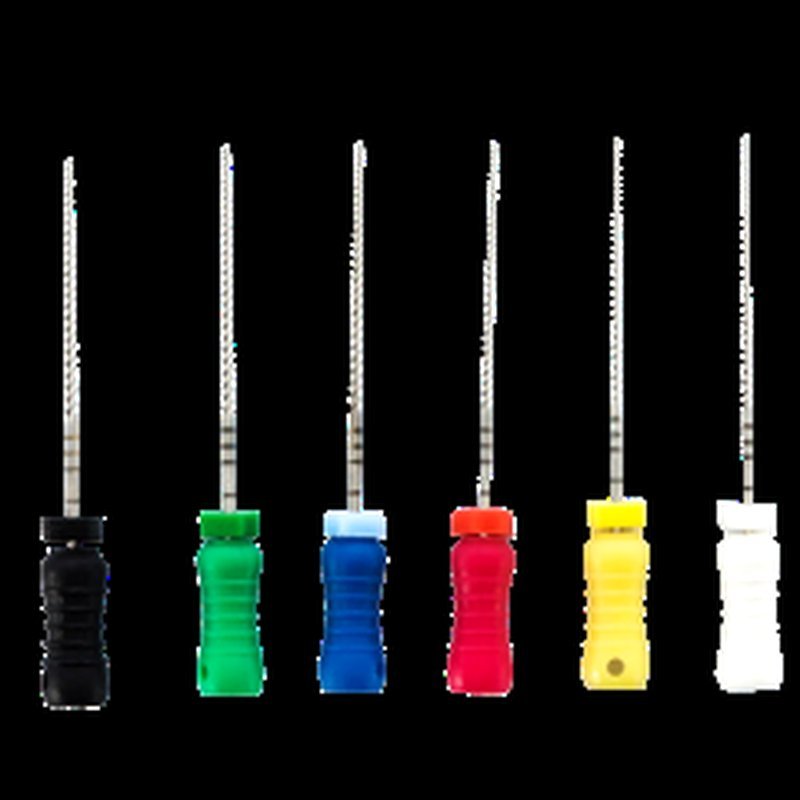
A K file is a stainless-steel hand file. k files in endodontics are used in endodontics to locate and negotiate root canals. It features a twisted square or rhomboid cross-section for efficient cutting and comes in lengths of 21mm, 25mm, and 31mm, with ISO color-coding to indicate tip size. K flex files provide excellent tactile feedback, making them essential for creating a smooth glide path before using rotary instruments in root canal therapy.
What is a k file?
A K file is a stainless-steel hand file commonly used in endodontics to locate root canals and create a smooth glide path to the apex. These files are typically employed before using rotary files and are favoured by dentists and endodontists for their superior tactile feedback compared to rotary instruments. Most K files follow the universal ISO color-coding scheme, indicating the tip size, and are available in lengths of 21mm, 25mm, and 31mm.
The cutting edge features a twisted square cross-section, while files sized 40 and above have a rhomboid cross-section for enhanced cutting efficiency.
Types and Variations in k file:
- Standard K Files: Made from stainless steel with a twisted square cross-section (up to size 40). Available in lengths of 21mm, 25mm, and 31mm. Color-coded handles following the ISO standard to indicate tip size.
Significance: Commonly used for locating canals and negotiating root canal systems. Provide excellent tactile feedback for practitioners.
- K Reamer Files: Similar to K flex files but with a more aggressive cutting edge. Designed with fewer flutes, enhancing the cutting efficiency.
Significance: Effective for enlarging and shaping the canal after initial negotiation with standard K files. Helps in creating a smooth and tapered canal preparation.
- K Files with Different Taper Designs: Available in varying tapers (e.g., .02, .04, .06). Different designs optimize canal shaping.
Significance: Allows for customized canal preparation based on specific anatomical requirements. Improves cleaning and shaping efficiency in curved canals.
- NiTi K Files (Nickel-Titanium K Files): Made from nickel-titanium alloy, providing flexibility and resistance to breakage. Similar size and shape as stainless steel K files but offers improved handling.
Significance:Ideal for curved canals where traditional stainless steel K files may risk breaking. Reduces the risk of procedural errors due to their flexibility.
- Larger K Files (Size 40 and Above): Feature a rhomboid cross-section for better cutting efficiency. Same ISO color-coding for consistency.
Significance: Used in the later stages of canal shaping when more significant preparation is needed. Helps achieve a larger canal diameter for improved cleaning and filling.
- Flexible K Files: Specifically designed to be more flexible than standard K files. Useful in complex canal systems.
Significance: Allows for better adaptability in curved and challenging canals. Reduces the risk of ledging and perforation during canal preparation.
- Endodontic K Files with Different Handle Designs: Available with ergonomic or specialized handles for improved grip and control.
Significance: Enhances comfort for clinicians, especially during prolonged procedures. Reduces hand fatigue, improving overall procedural efficiency.
- Surgical K Files: Designed specifically for use in surgical endodontic procedures. Made from high-quality stainless steel or NiTi for durability.
Significance: Essential for accessing and cleaning complex root canal systems during surgical interventions. Provides optimal control and precision in challenging situations.
Benefits of Using k file:
- K files are designed to locate and negotiate complex root canals, facilitating easier access during root canal treatment.
- The hand-operated design provides excellent tactile sensitivity, allowing dentists to feel resistance and navigate curvatures effectively.
- They can be used in various stages of endodontic procedures, from canal exploration to shaping and cleaning.
- Available in multiple sizes (ISO color-coded) and lengths (21mm, 25mm, 31mm), K files can be selected based on the specific requirements of each case.
- The twisted square cross-section (up to size 40) and rhomboid cross-section (sizes 40 and above) improve cutting efficiency and reduce binding.
- Made from stainless steel or nickel-titanium, K files are durable and resistant to breakage, ensuring reliable performance during procedures.
- The unique design allows for effective cutting and debris removal, promoting a cleaner and smoother canal preparation.
- K files come in different taper designs, enabling customization for various canal shapes and sizes, which enhances the quality of the canal preparation.
- They can be easily sterilized and reused, making them cost-effective for dental practices.
- K files are commonly used in conjunction with rotary instruments, providing a comprehensive approach to canal preparation.
- The flexibility and design of K files minimize the risk of ledging, perforation, and other procedural complications during canal shaping.
- By facilitating a smoother and more efficient endodontic procedure, K files contribute to a more comfortable experience for patients.
Uses and Applications of k file:
- Canal Exploration: K files are used to locate the entrance of the root canal system. They help in identifying and negotiating canals that may be challenging to access due to curvature or anatomy.
- Canal Shaping: K files are instrumental in shaping the root canal to facilitate proper cleaning and filling. They are used to enlarge and shape the canal to a taper that allows for effective irrigation and obturation.
- Debridement: K files assist in removing debris and infected tissue from the canal. This is crucial for disinfecting the canal and preparing it for filling.
- Apical Preparation: K files help prepare the apex of the root canal. Ensures a smooth glide path for larger instruments or rotary files to reach the apex effectively.
- Retreatment Procedures : K files can be used in retreatment cases where previous root canal therapy has failed. They help in negotiating and reshaping the existing canal for retreatment.
- Preparation of Curved Canals: Their flexible design allows K files to navigate curved or irregular canals. This is particularly beneficial in molar teeth where the canal systems can be complex.
- Cleaning and Disinfection: K files are utilized for effective cleaning during endodontic procedures. They facilitate the removal of necrotic tissue and debris, ensuring a clean canal environment for filling.
- Irrigation Delivery: K files can be used to deliver irrigants deeper into the canal.This enhances the effectiveness of disinfection solutions used during root canal treatment.
- Pre-Obturation Preparation: K files help in ensuring the canal is adequately shaped before filling.This ensures that the root canal is ready for obturation with materials like gutta-percha.
- Endodontic Surgery: K files may be used in surgical endodontic procedures for canal preparation.They assist in cleaning and shaping canals that are accessed surgically.
How to Care for your k file:
- After each use, rinse K files endo under running water to remove debris and blood. This prevents buildup that can damage the files.
- Consider using an ultrasonic cleaner for thorough cleaning, especially for files that have been used in complex cases.
- K files should be sterilized before each use, typically by autoclaving at the appropriate temperature and pressure (usually 121°C for 15-20 minutes).
- Do not soak K files in corrosive disinfectants, as this can damage the metal.
- Before each use, inspect K files for signs of wear, bending, or breakage. Discard any damaged files to prevent complications during procedures.
- Store K files in a clean, dry environment to prevent rust and corrosion.
- Use designated sterilization containers or racks to keep files organized and protected from damage.
- Use K files endo gently to avoid bending or breaking. Apply consistent but moderate pressure while working in the canal.
- Do not force a K file into a canal if it meets resistance; this can lead to breakage.
- Keep K files organized by size and length to avoid confusion and ensure you always use the correct file for the job.
- While some K files endo are designed for reuse, consider using them only a limited number of times to maintain their effectiveness. Discard files that show wear.
- Ensure that all dental staff are trained on the proper care, cleaning, and handling of K files to maintain consistency in practice.
Choosing the Right k files:
- Stainless Steel: Cost-effective with excellent cutting efficiency. However, they are less flexible and more susceptible to breakage in curved canals.
- Nickel-Titanium: More flexible and resistant to breakage, making them ideal for navigating complex canal systems. They tend to be more expensive than stainless steel options.
- Taper and Tip Size: When selecting K-files, consider the taper and tip size, both crucial for specific clinical scenarios.
- Taper: K-files typically range from 0.02 to 0.12. A larger taper allows for more aggressive cutting and quicker canal shaping but can also remove more dentin, potentially weakening the tooth structure. Choose a taper based on your clinical needs.
- Tip Size: K-files come in various tip sizes, indicated by ISO color-coding. Smaller sizes (e.g., 6, 8, or 10) are suitable for initial exploration, while larger sizes (e.g., 20, 25, or 30) are better for shaping and cleaning. Select a range of sizes to accommodate different canal anatomies.
- Handle Design: Ergonomics is crucial when choosing K-files. Opt for files with comfortable handles that provide a secure grip and good tactile feedback. Many K-files feature color-coded handles corresponding to the ISO tip sizes, simplifying identification during procedures.
- Single-Use vs. Reusable Files: While traditionally reusable after sterilization, single-use K-files are gaining popularity to reduce cross-contamination risks and file fatigue. Single-use options save time on cleaning and sterilization but may be more costly over time. Assess your practice’s needs and infection control protocols to determine which option is best.
Buy k files online at Medikabazaar:
Purchasing K-files online from Medikabazaar is a straightforward process designed for convenience. Begin by visiting the Medikabazaar website and use the search bar or navigation menu to browse the selection of K-files, filtering options by material, size, and brand to find your preferred choice. Once you’ve identified the desired product, click on it to view detailed information, including specifications and pricing. To place an order, select the quantity and click the “Add to Cart” button. Proceed to checkout by following the prompts to provide shipping and payment information. If you encounter any issues or have questions, Medikabazaar offers dedicated customer support via live chat, email, or phone, ensuring you receive assistance throughout your purchasing experience.
Benefits of Purchasing k files from Medikabazaar:
|
Brand
|
File Material
|
Length
|
Tip Size
|
Affordability
|
Quality Rating
|
Comments
|
|
Waldent
|
Stainless Steel
|
21 mm
|
25
|
Affordable
|
High
|
Good cutting efficiency, popular choice.
|
|
Mani
|
Nickel-Titanium
|
25 mm
|
20
|
Moderate
|
Very High
|
Flexible and durable for curved canals.
|
|
M Access
|
Stainless Steel
|
31 mm
|
30
|
Affordable
|
Medium
|
Suitable for general use in canals.
|
|
Dentsply
|
Nickel-Titanium
|
21 mm
|
25
|
Higher Price
|
Very High
|
Excellent for complex canal systems.
|
|
Medident
|
Stainless Steel
|
25 mm
|
30
|
Affordable
|
High
|
Reliable option with good feedback.
|
FAQ’s
Q1. What are K Files?
Ans. K-files are specialized stainless steel or nickel-titanium instruments. k files in endodontics are used for cleaning and shaping root canals. Their design allows for effective canal exploration, removal of debris, and preparation of the canal system for filling.
Q2. What materials are K Files made of?
Ans. K-files are primarily made from stainless steel and nickel-titanium. Stainless steel offers cost-effectiveness and durability, while nickel-titanium provides enhanced flexibility and resistance to breakage, making it suitable for curved canals.
Q3. What sizes do K Files come in?
Ans. K-files are available in various sizes, typically ranging from 6 to 40, with specific ISO color-coding to indicate the tip size. They also come in lengths of 21 mm, 25 mm, and 31 mm to accommodate different clinical needs.
Q4. Can K Files be reused?
Ans. Yes, K-files can be reused after proper sterilization, making them a cost-effective option in dental practices. However, it’s essential to inspect them for any signs of wear or damage before each use to ensure their effectiveness and safety.
Q5. How should K Files be sterilized?
Ans. K-files should be sterilized using an autoclave at a temperature of 121°C (250°F) for at least 15-20 minutes to effectively eliminate pathogens. It’s important to follow the manufacturer’s guidelines for sterilization to maintain the integrity of the files.



Reviews
There are no reviews yet.